


Shared Projects
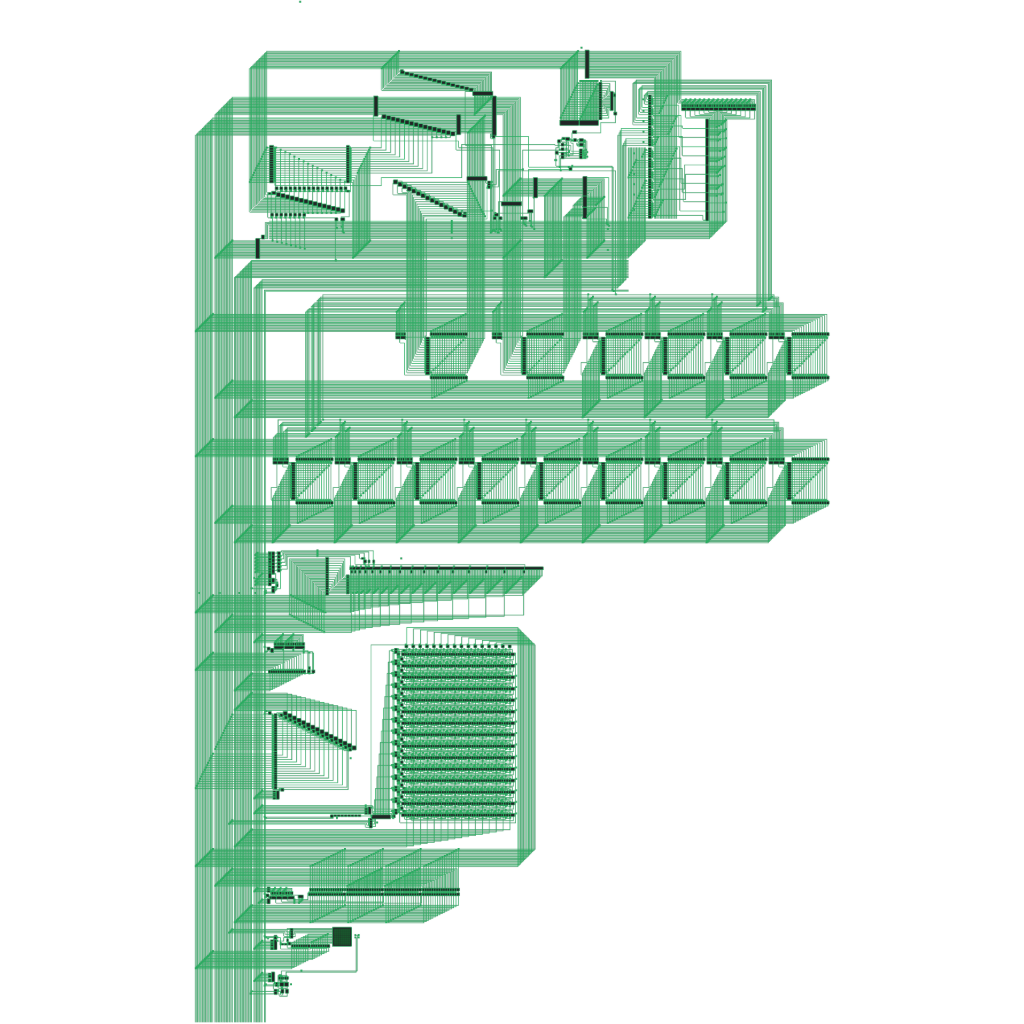
16-Bit General Purpose CPU.
A technical documentation about the architecture can be found here: https://docs.google.com/spreadsheets/d/1MG44B5RzTul4EMDJowlx4hgNE3XYFRoyR7EFi6A0o3M/edit?usp=sharing
Features:
- Fully programable
- 16 registers
- Up to 128KiB of memory
- Integer operations
- Boolean operations
- Stack
- Function calls
- 16x16 display with basic IO
Included program: PONG
Set the simulation to ~100 kHz tick speed for the intended game speed.
Where to find things:
- Display: at the bottom of the circuit.
- Buttons: UP and DOWN, to the right of the display.
How to play:
- Title screen: press any button.
- Menu: UP cycles the bot difficulty (1-5, shown as a staircase),
DOWN starts the game.
- In game: UP / DOWN move your paddle (left side).
- Where the ball hits your paddle decides its direction:
top edge -> ball goes up
middle -> ball goes straight
bottom edge -> ball goes down
Aim away from the bot to get the ball past it!
- The ball gets faster the longer a rally lasts.
- After each point the score is shown (you left, bot right) and the
scorer's digit blinks. Press a button or wait to serve again.
- First to 8 points wins. Press a button to return to the menu.
Difficulty:
Low levels react late and mostly return the ball straight.
High levels react early and aim for the edges, away from your paddle.
TODO:
- Serial Bus
- Interrupts

16-Bit General Purpose CPU.
A technical documentation about the architecture can be found here: https://docs.google.com/spreadsheets/d/1MG44B5RzTul4EMDJowlx4hgNE3XYFRoyR7EFi6A0o3M/edit?usp=sharing
Features:
- Fully programable
- 16 registers
- Up to 128KiB of memory
- Integer operations
- Boolean operations
- Stack
- Function calls
- 16x16 display with basic IO
Included program: PONG
Set the simulation to ~100 kHz tick speed for the intended game speed.
Where to find things:
- Display: at the bottom of the circuit.
- Buttons: UP and DOWN, to the right of the display.
How to play:
- Title screen: press any button.
- Menu: UP cycles the bot difficulty (1-5, shown as a staircase),
DOWN starts the game.
- In game: UP / DOWN move your paddle (left side).
- Where the ball hits your paddle decides its direction:
top edge -> ball goes up
middle -> ball goes straight
bottom edge -> ball goes down
Aim away from the bot to get the ball past it!
- The ball gets faster the longer a rally lasts.
- After each point the score is shown (you left, bot right) and the
scorer's digit blinks. Press a button or wait to serve again.
- First to 8 points wins. Press a button to return to the menu.
Difficulty:
Low levels react late and mostly return the ball straight.
High levels react early and aim for the edges, away from your paddle.
TODO:
- Serial Bus
- Interrupts
im stronger, im faster, i am better. I AM BETTER
Grüße an die Spätschicht :)

im stronger, im faster, i am better. I AM BETTER
Grüße an die Spätschicht :)
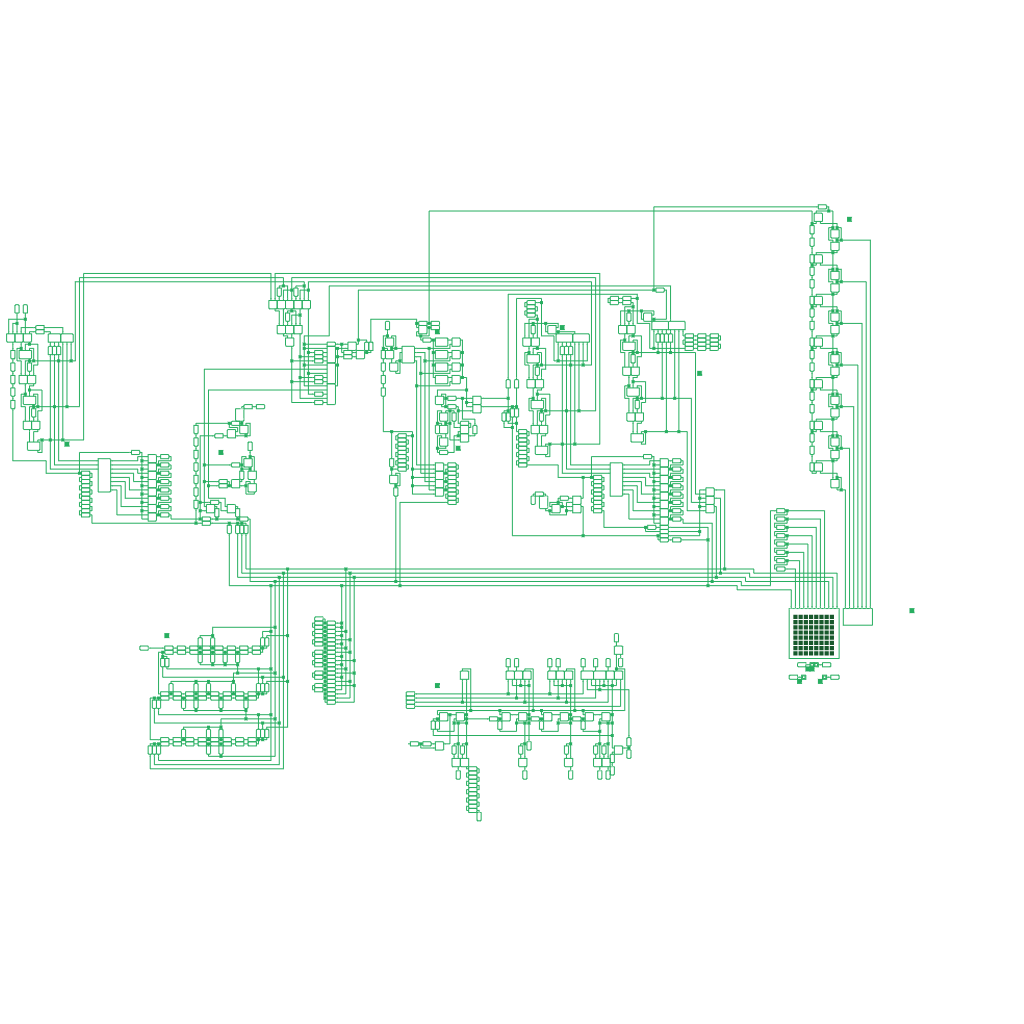
Follow the instructions next to the display to play this small simple game.

Auch von mir schöne Grüße an die Spätschicht!
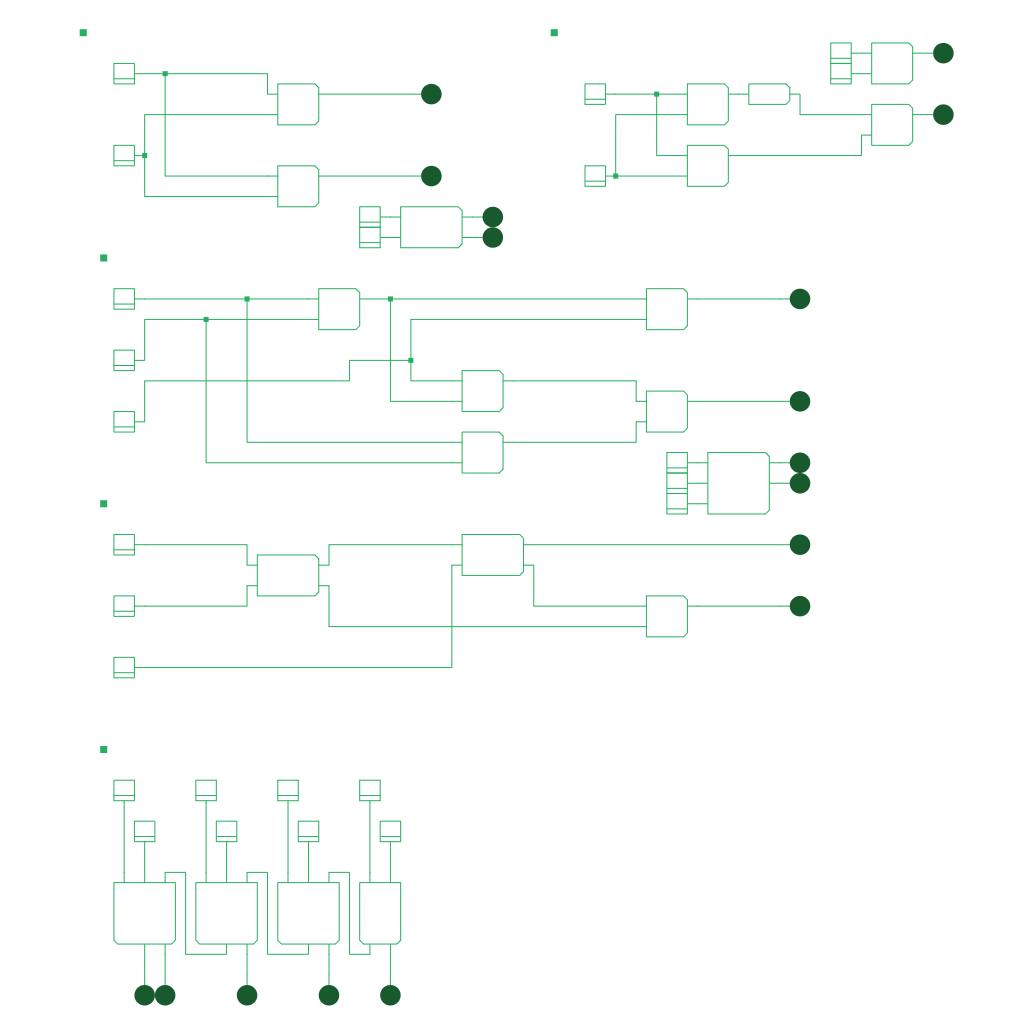
Inhalt:
- XOR Gatter aus Basisteilen
- Halbaddierer aus Basisteilen
- Volladdierer aus Basisteilen
- Volladdierer aus Halbaddierern
- 4-Bit / n-Bit Binär Addierer aus Volladdierern und Halbaddierern

No description was provided.
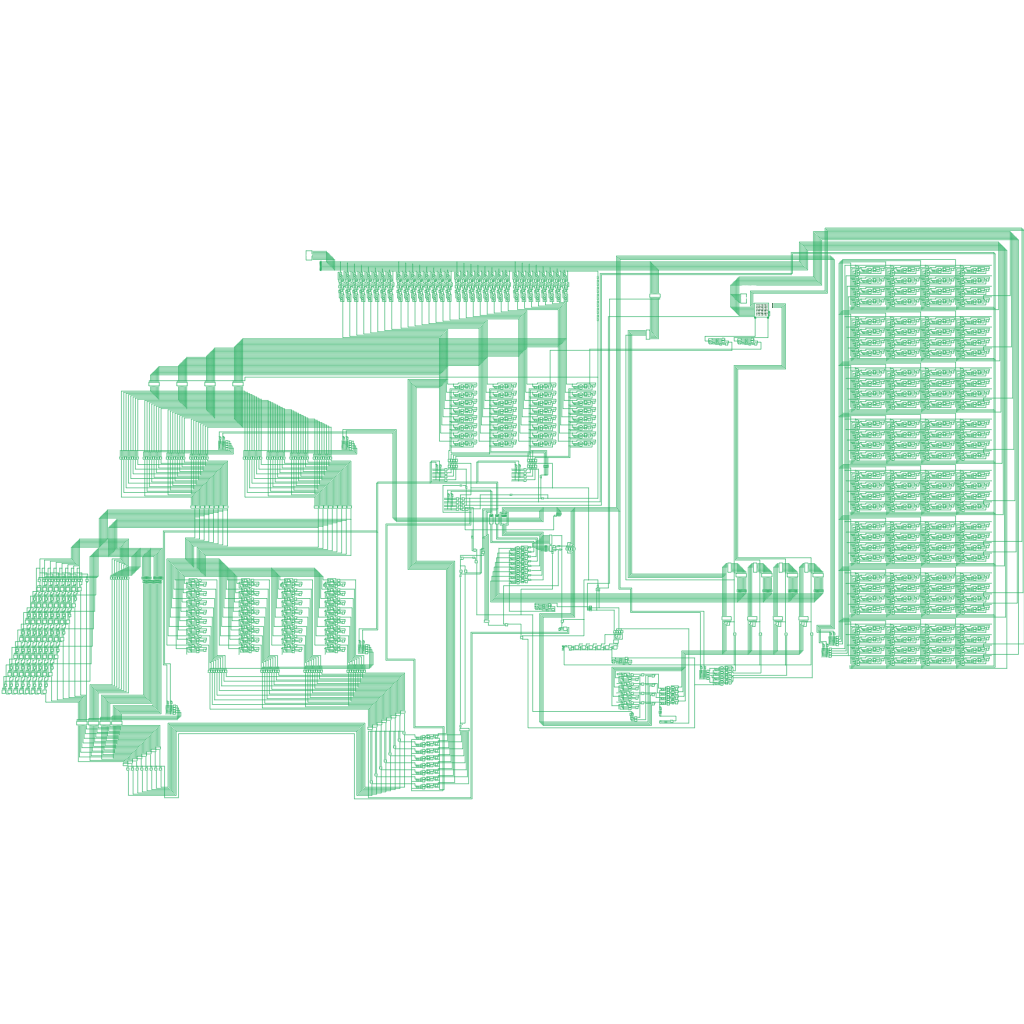
A custom fully programmable 8-BIT CPU.
Very transparent! (You see everything happening!)
I implemented design choices in CPU architecture to
enhance its efficiency, even though it doesn't alter the functionality of
the CPU itself. Basically bringing its theoretical TDP down.
AS FEW ADVANCED GATES AS POSSIBLE!
128 BIT RAM
512 BIT ROM
4 GENERAL PURPOSE REGISTERS
SWAPPABLE ALU (8 OPERATIONS TOTAL)
Higher or lower number game already programmed!

A custom fully programmable 8-BIT CPU.
Very transparent! (You see everything happening!)
I implemented design choices in CPU architecture to
enhance its efficiency, even though it doesn't alter the functionality of
the CPU itself. Basically bringing its theoretical TDP down.
AS FEW ADVANCED GATES AS POSSIBLE!
128 BIT RAM
512 BIT ROM
4 GENERAL PURPOSE REGISTERS
SWAPPABLE ALU (8 OPERATIONS TOTAL)
Higher or lower number game already programmed!
Lyrics:
Couse my style is ridicdicdicdiccoulescoulescoules drrr skibidi dop dop dop yes yes skibidi w dip dip skibidi dop dop dop yes yes skibidi w dip dip, we hear its such a Party skibidi skibidi skibidi....

Lyrics:
Couse my style is ridicdicdicdiccoulescoulescoules drrr skibidi dop dop dop yes yes skibidi w dip dip skibidi dop dop dop yes yes skibidi w dip dip, we hear its such a Party skibidi skibidi skibidi....
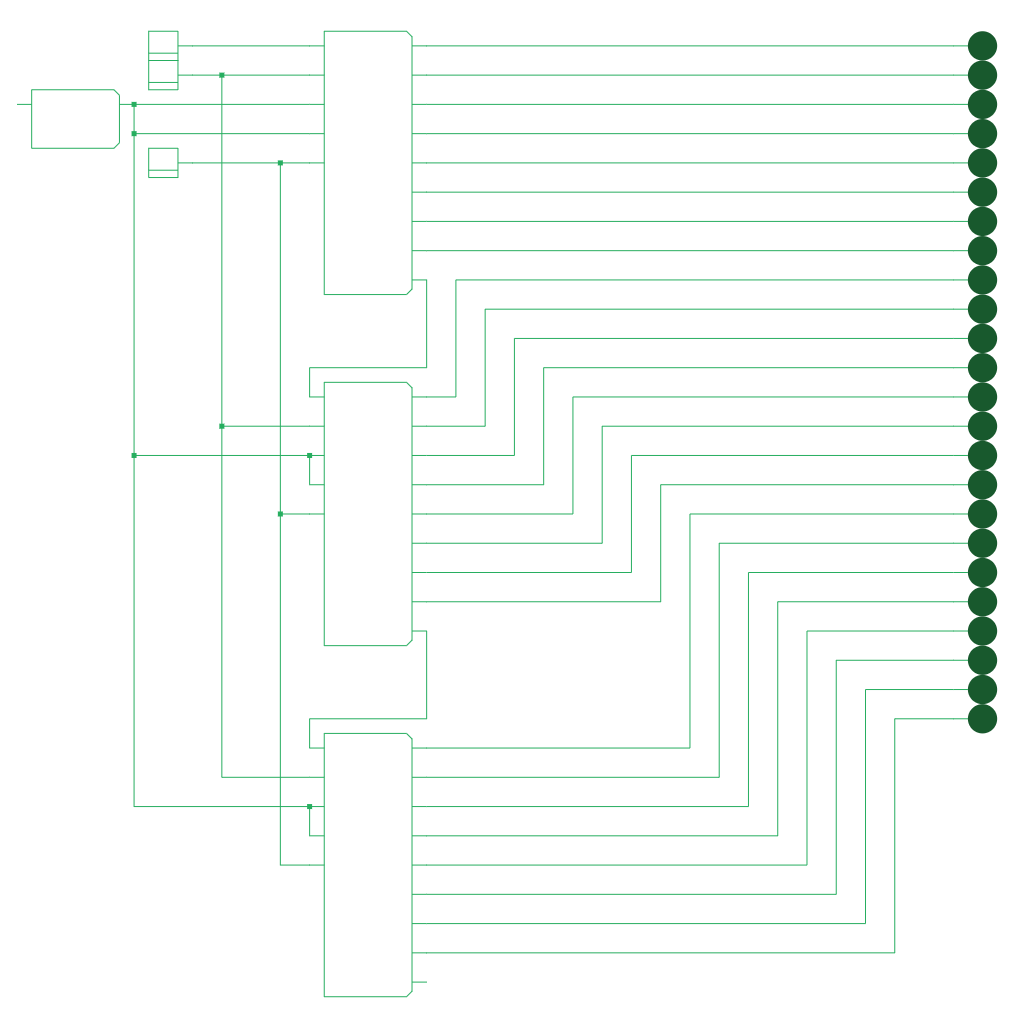
Runlight with 74HC595
Press SER-Button to Insert Data.
Set nCLR on Hight.
nOE on Low, to activate.

Runlight with 74HC595
Press SER-Button to Insert Data.
Set nCLR on Hight.
nOE on Low, to activate.
No description was provided.


1. Allgemeine Beschreibung
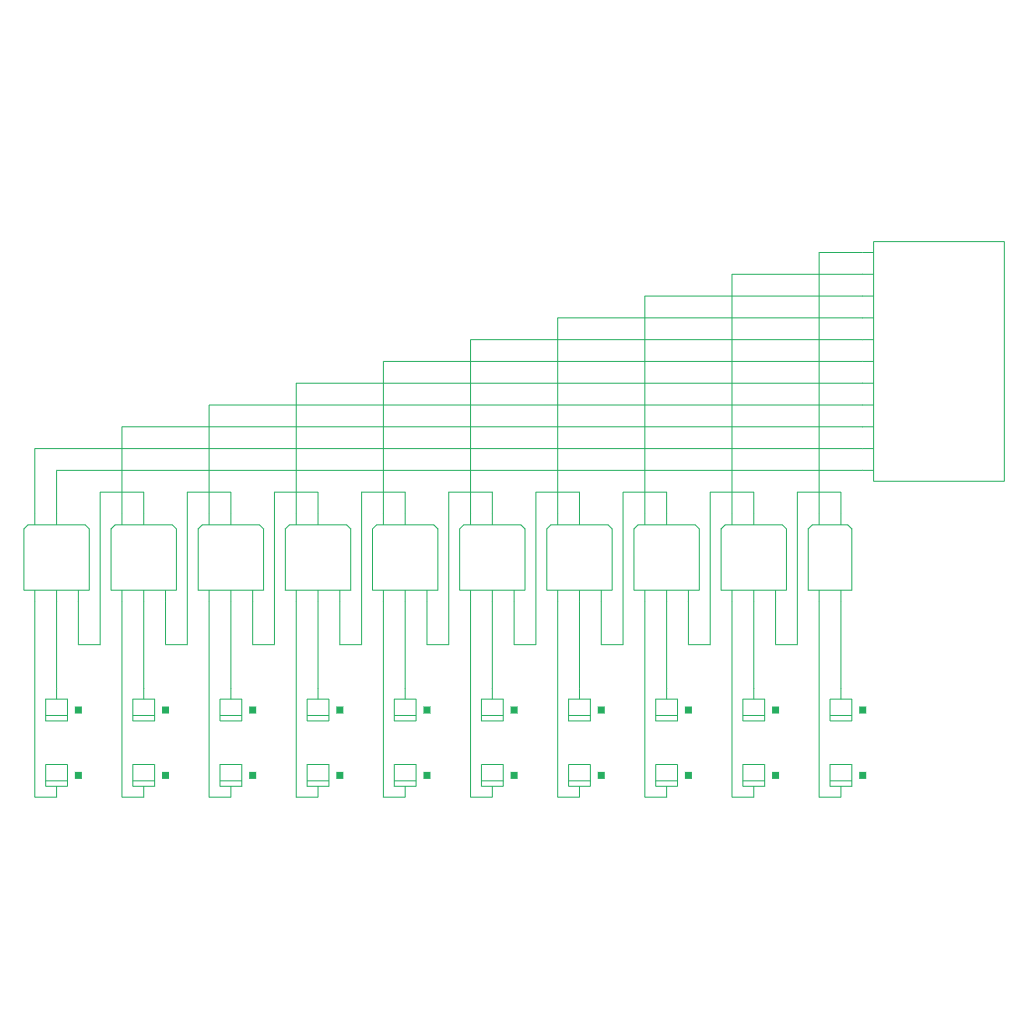
Diese Schaltung ist ein 9-Bit-Binär-Addierer, der zwei 9-Bit-Zahlen addiert. Da 512 im Binärsystem 100000000₂ entspricht, benötigen wir 9 Bits, um beide Eingangsgrößen (bis 512) und das mögliche Übertragsbit zu berücksichtigen.
2. Aufbau der Schaltung
Die Schaltung basiert auf einer Kombination aus Halbaddierern (HA) und Volladdierern (FA):
Bit 0 (LSB - niederwertigstes Bit): Wird mit einem Halbaddierer (HA) berechnet, da kein Eingangsübertrag vorhanden ist.
Bit 1 bis 8: Werden mit Volladdierern (FA) realisiert, da sie einen möglichen Übertrag vom vorherigen Bit erhalten.
Übertragsbit (Carry-Out): Falls die Summe größer als 1023 ist, wird ein Carry-Out erzeugt.
3. Funktionsweise
Die zwei 9-Bit-Binärzahlen werden parallel in die Addierstufen eingegeben.
Jeder Bit-Addierer verarbeitet seine beiden Eingangswerte sowie ggf. einen Übertrag aus der vorherigen Stufe.
Die Ergebnisse aller Bit-Addierer bilden die 9-Bit-Summe.
Falls das Carry-Out-Bit gesetzt ist, bedeutet das, dass das Ergebnis 1024 oder größer ist.
4. Logische Komponenten
1 Halbaddierer (HA) für Bit 0
8 Volladdierer (FA) für Bit 1 bis 8

1. Allgemeine Beschreibung
Diese Schaltung ist ein 9-Bit-Binär-Addierer, der zwei 9-Bit-Zahlen addiert. Da 512 im Binärsystem 100000000₂ entspricht, benötigen wir 9 Bits, um beide Eingangsgrößen (bis 512) und das mögliche Übertragsbit zu berücksichtigen.
2. Aufbau der Schaltung
Die Schaltung basiert auf einer Kombination aus Halbaddierern (HA) und Volladdierern (FA):
Bit 0 (LSB - niederwertigstes Bit): Wird mit einem Halbaddierer (HA) berechnet, da kein Eingangsübertrag vorhanden ist.
Bit 1 bis 8: Werden mit Volladdierern (FA) realisiert, da sie einen möglichen Übertrag vom vorherigen Bit erhalten.
Übertragsbit (Carry-Out): Falls die Summe größer als 1023 ist, wird ein Carry-Out erzeugt.
3. Funktionsweise
Die zwei 9-Bit-Binärzahlen werden parallel in die Addierstufen eingegeben.
Jeder Bit-Addierer verarbeitet seine beiden Eingangswerte sowie ggf. einen Übertrag aus der vorherigen Stufe.
Die Ergebnisse aller Bit-Addierer bilden die 9-Bit-Summe.
Falls das Carry-Out-Bit gesetzt ist, bedeutet das, dass das Ergebnis 1024 oder größer ist.
4. Logische Komponenten
1 Halbaddierer (HA) für Bit 0
8 Volladdierer (FA) für Bit 1 bis 8
No description was provided.